
·
The
giraffe is the tallest mammal in the world - at an average height of around 5 m
(16-18 ft.).
 |
| Source: Travelblog |
·
It
is characterized by its long legs, long neck, and distinctive spotted pattern.
·
No
two giraffes have the same spot pattern.
·
The
distinctive spots on their fur is a good camouflage to protect the giraffe from
predators. When they stand in front of trees and bushes the light and dark
colouring of its fur blends in with the shadows and sunlight.
·
When
giraffes walk, they move both legs on one side of their body and then both legs
on the other side.
·
Their
height helps it to keep a lookout for predators across the wide expanse of the
African savanna.
·
A
giraffe’s neck is 1.5 – 1.8 metres and contains the same number of vertebrae at
a human neck.
·
The
sex of the giraffe can be identified from the horns on its head. Both males and
females have horns but the females are smaller and covered with hair at the
top. Male giraffes may have up to 3 additional horns.
 |
| Source: HD Wallpapers Act |
·
The
hair that makes up a giraffes tail is about 10 times thicker than the average
strand of human hair.
 |
| Source: Pinterest |
 |
| Source: World Atlas |
 |
| Source: Rantpets |
·
Giraffes
only need to drink once every several days as they get most of their water from
the plants they eat.
·
They
are ruminants, meaning they have more than one stomach. In fact, they have four
stomachs, the extra stomachs assisting with digesting food.
·
Even
new-born babies being taller than most humans.
 |
| Source: Inhabitat |
·
Female
giraffes carry a baby for 15 months and give birth while standing up.
·
Newborns
are about 2 m (6 ft.) tall and weigh 70 kg (150 lb.).
·
Their
young endure a rude welcome into the world by falling more than 5 feet (1.5
meters) to the ground at birth.
·
Baby
Giraffes stand within half an hour and after 10 hours can run beside their
family.
·
Giraffes
spend most of their lives standing up.
·
They
sleep and give birth standing up.
·
They
have a very short sleep requirement by spending between 10 minutes and two
hours asleep per day.
·
Giraffes
are sociable, peaceful animals which rarely fight.
·
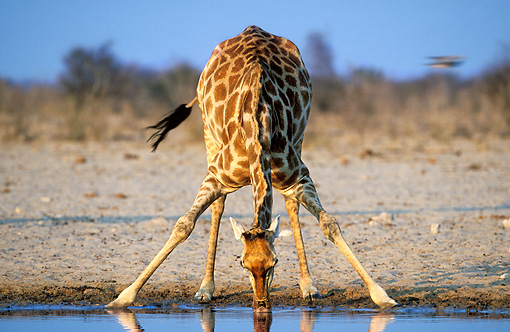
It
is extremely dangerous to drink at a water whole as they have to spread their
legs and bend down in an awkward position that makes them vulnerable to
predators. Thus, the giraffe's stature can be a disadvantage, too.
 |
| Source: Kimballstock |
·
Giraffes
live primarily in savanna areas in the sub-Saharan region of Africa.
·
Typically
they roam the open grasslands in small groups of about half a dozen.
·
They
live up to 25 years in the wild.
·
Giraffes
are listed by IUCN’s Red List as a species of least concern.
 |
| Source: Oak Trees US |
·
They
face several threats such as loss of habitat due to logging for firewood. They
are also hunted for their meat, hides, and tails.
References
http://www.onekind.org/education/animals_a_z/giraffe/


