Showing posts with label Monochromatic Marvels. Show all posts

Friday, 20 January 2017

Penguin Awareness Day

Source: Dreamatico
Today, the 20th of January, marks Penguin Awareness Day, an annual occurrence which provides the perfect opportunity to highlight penguins and learn more about these species. It is a day to specifically appreciate these natives of Antarctica whose numbers are dwindling daily. This day is also aimed at bringing international focus on the conservation of penguin habitats.

Source: TreeHugger
But why is Penguin Awareness Day important? Penguins continue to be one of the most threatened species on the planet due to several threats such as climate change, oil pollution, an insufficient food supply, and getting caught in fishing nets have led to a rapid decline in their population.
  
Source: Defenders organization
So, please join your fellow penguin lovers and wholeheartedly celebrate our tuxedo-bearing friends!
 
Source: BoredPanda
Powerful penguin facts:
·   Penguins are a group of aquatic, flightless birds living almost completely in the Southern Hemisphere, especially in Antarctica, South Africa, Australia, New Zealand, Chile, Peru, the Falkland Islands, and the Galapagos Islands.
·         Highly adapted for life in the water, penguins have counter-shaded dark and white plumage, and their wings have evolved into flippers.
·         The black and white coloring of the penguins is a camouflage, helping them to hide from underwater predators.
·         They spend about half of their lives on land and half in the oceans.
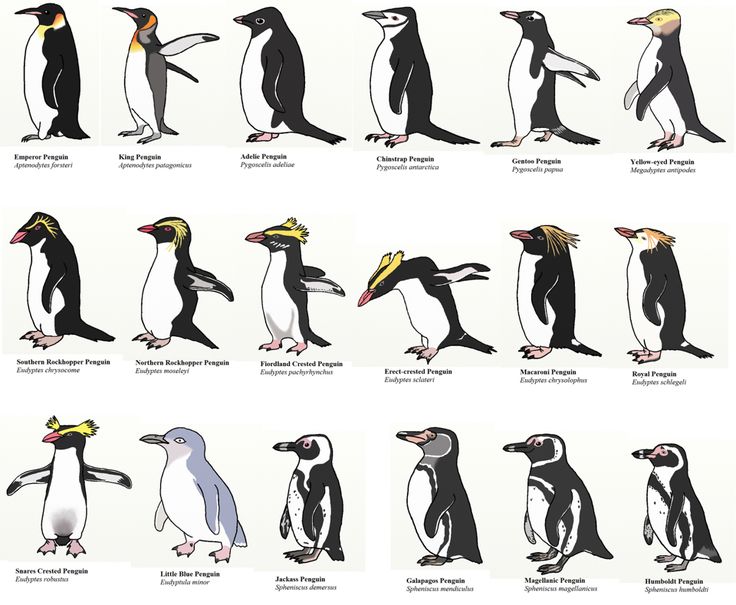
·         There are about 20 known species of penguins, the largest of which are the emperor penguins.
Source: Pinterest
·         The smallest known penguin species are the little penguin found in the coastal areas of Australia and New Zealand.
·         The fastest penguins – the Gentoo – can swim at the speed of 22 miles or 35 kilometers an hour.
·         They either waddle on their feet or slide on their bellies across the snow, a movement called "tobogganing", conserving energy while moving quickly.
·         They jump with both feet together if they want to move more quickly or cross steep or rocky terrain.
·         In the water, they are astoundingly agile.
·         The air layer also helps insulate the birds in cold waters.
·         On land, penguins use their tails and wings to maintain balance for their upright stance.

Source: Pinterest
References


Saturday, 25 April 2015

Celebrating World Penguin Day on the 25th of April

Happy World Penguin Day!


Please celebrate World Penguin Day with me and I'll give you some of this cuteness as a reward! Thank you

Penguins are not just adorably cute creatures, they are also uniquely remarkable. World Penguin Day is annually celebrated on the 25th of April as the annual northward migration of these spectacular species is on or around April the 25th. Penguins are flightless, aquatic birds living most in the Southern Hemisphere, especially in Antarctic as well as South Africa, Peru, Chile, Australia, New Zealand, the Falkland Islands and the Galapagos Islands. There are approximately 17 - 20 different penguin species.

Range of All Penguin Species
 
World Penguin Day is celebrated to learn more about these fascinating species and to fully appreciate such a beautifully intriguing species. This day is about raising important awareness about penguins’ habits, their habitats, and their journey to survival and to just celebrate these popularly iconic and charismatic birds. It is also about getting people to do their bit to conserve these majestically monochromatic species.  


(Source: Daily Mail UK)

They have adapted exceptionally to life in the water and live in some of the harshest environments on earth and can survive and thrive in inhospitable Antarctica, where temperatures are as low as -50C. Penguins’ wings have evolved into flippers. Penguins also form an integral part of the ecosystem of Antarctica and changes in their populations, have detrimental consequences for other sections of the food chain. It is vital that we protect the oceans around Antarctica as penguins spend about 75% of their whole lives at sea. Unfortunately many of the penguins are threatened, so much so that 60 % of the 18 penguin species are listed as threatened by the IUCN.
 
(Source: Penguins World)
 
Please show your support and celebrate these incredibly beautiful species! Please see more information with regards to Penguins, World Penguin Day and the efforts that are done to protect this valuable species at:


Facts about Penguins


Here are some interesting facts about the beautiful species:

·       The largest living species is the Emperor Penguin (Aptenodytes forsteri). On average adults are about 1.1 m tall and weigh 35 kg or more. The male Emperor Penguin stays at home looking after the egg whilst the female hunts for food. They are exceptionally insulated with various layers of scale-like feathers. They are fantastic divers and forage at depths from 150 to 250 metres and last about 5 minutes.
Emperor Penguin (Source: Wikipedia).
·       The smallest penguin species is the Little Blue Penguin (Eudyptula minor) which stands around 40 cm tall and weighs 1 kg.
A Little Blue Penguin (Source: Wikipedia).
·       Interestingly, Royal and macaroni penguins lay two eggs because the first is too small and, therefore, discarded.

·       Penguins are extremely social animals
·       They breed in large colonies for protection purposes (there’s safety in numbers) and can range from 200 to hundreds of thousands.
A large colony of King Penguins (Source: Wikipedia).
·       Nesting sites vary between species, and can include sea ice, rock, and beaches.

·       Penguins have adapted to help reduce heat loss through the feet and prevent the feet from freezing when they are standing on ice.

·       Penguins moult once a year to replace worn feathers so as to keep their plumage looking good and moult all their feathers at the same time.

·       Most penguins are monogamous and have distinct calls, enabling them to locate their mates in large groups.

·       The black and white parts of the body are there for camouflage when they swim. From above, their black backs blend into the dark ocean water and, from below, their white bellies match the bright surface lit by sunlight, helping to avoid detection by predators and hunt for fish unseen.

·       Penguins are able to drink salt water because they have special gland which can filter salt from the blood stream.

·       Penguins do not have teeth, but have a tongue that is covered with backward-facing fleshy spines, helping them to snap the slippery fish.

·       They’re extremely powerful swimmers with streamlined bodies and flipper enable them to travel with great speed underwater to catch fish, squid and crustaceans, including krill.
Source: Wikipedia
·      Negative impacts of human beings and their activities include overfishing, coastal development, 
     and the impacts of climate change have a negative impact on the overall penguin populations.
      So now that you know more about these stunning species, please show your support this World Penguin Day! I know the penguins will greatly appreciate it and they will even do their happy feet dance in return!

(Source: Happy Feet Movie)